code blog

Blue Nile Gorge

Posted on November 20th, 2008 in: Seeing is Believing Tour

Yesterday we went to the Ministry of Education office and met with the head of education to discuss the obstacles faced by primary school teachers in the region. He told us about the low resources for teacher training, lack of books, supplies, classroom overcrowding etc. By now the group is familiar with these challenges. And although we’ve also become familiar with the passion of Ethiopians, what impressed us most was his energy, vision, intelligence and drive to turn the situation around. He told us of the great successes in the region to set up schools, satellite classrooms and alternative classrooms. This was a very impressive man making a big impact in his region in his 6th year on the job. We left feeling that inspite of the difficulties this man could, and would, make a difference. He encouraged Canadians to challenge our government to increase overseas development assisstance and to forget the politicians, the bureaucrats and the teachers…. To him it was all about the children and the positive future of the country that can only be attained by creating an educated generation.

The long drive from Bahir Dar to Addis Ababa yesterday took us through the stunning Blue Nile Gorge - a descent of 1.5 kilometers and back up again - like driving through the Grand Canyon. Our final leg of the day’s journey was dramatized by a gorgeous pink sky and setting sun.

- Ann Speak

 
Despite the magnificent scenery, my favourite memory of today will be the smiling faces and waves of the chilren as we passed. Whether they were working in the fields tending thier herds or walking to school, they always smiled and waved. They are open, eager to greet us and pround. As the beureau Chief of the Amhara District of Education told us, we must focus on what is best for the children. With over 99% of children 7 years of age and over now enrolled in school, the quantity side of Educton for All has been achieved. The challenge now is the quality - for urban and rural kids (some rural kids walk 3 km each way to school) for all languages in this country. We must give them a hand up - not a hand out. More reading rooms  with more and appropriate books this is a big challenge but the key to quality in education.
- Margaret Casey

A journalist in the making

Posted on November 18th, 2008 in: Seeing is Believing Tour

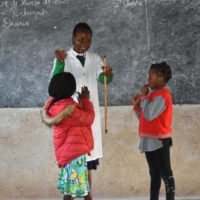
Yesterday we had fabulous visits to Merawi Reading Room and Durbete Reading Room - both rural and new since last year in the regions around Bahir Dar. Durbete put on an incredible welcoming ceremony with the children performing songs, traditional shoulder dances and small plays. They presented us with flowers and a traditional coffee ceremony. Even the local media came to cover the festivities.
- Ann Speak

One of the girls who introduced herself to us at the Durbete reading room said she wants to be a journalist. This is quite different from most students: doctor is the answer we usually hear. There is a great emphasis on the sciences (chemistry, physics, math and biology) in the Ethiopian school exams. But journalists, policy writers, and arts graduates are also necessary. The pride expressed in the fate of this future journalist gives me hope that she has the confidence and persistence to achieve her goal.
- Marlene Asselin

People’s gratitude for CODE has been overwhelming. The gifts presented to each member of the group were so moving it brought tears to my eyes. The gifts will be treasured forever and remind me of this special visit with Ethiopian people connected to the reading rooms. I have hopes that the students and children we talked to today will benefit immensely from the education and literacy programs. This remarkable day has certainly been food for thought.
- Loraine Rowan

The reception and celebration at the reading room was nothing short of extraordinary and overwhelming. The kids all dressed up and sang welcome songs that they wrote for us, gave us flowers, and the coffee ceremony put on by the women of the village served the best coffee I have ever tasted……what a people!
- John Casey

Feeling empowered…

Posted on November 18th, 2008 in: Seeing is Believing Tour

Lalibela passed like a dream. We had a free day there and some of us climbed to the top of a plateau to visit rough rock hewn monasteries high above the town. The view over Lalibela was spectacular, the mountainous terrain faded into the distance as we watched the constant parade of hill-top dwellers making their way down the mountain. The children were especially entertaining as they slide down the loose gravel path the same way Canadian children slide down ice and snow in the winter - having fun, and flying fast. A few members of the group stayed in town to relax and read in the shade, taking in the sights from a beautiful traditional tukul/coffee house.


In the evening we had a great meeting with leading members of the Lalibela community, including representatives from education, health, agriculture, tourism and the mayor. Our host served up a delicious meal and we had a full hour’s discussion about the issues facing Ethiopia in the future. Our guests answered all our questions, and were very clear in their message to us. They are under resourced, and very keen to acquire the training to build the kind of future they want for their children - improved health and education etc. They welcome foreign expertise to do it on their terms. Seems like every day we are faced with another opportunity to see how hard Ethiopians are working for a better future…

-Ann Speak


Humility. Integrity. Commitment - three small and inadequate words to describe the CODE Ethiopia staff. Add to that the boundless sense of hope that emanates from the group and their facility. I am humbled and somewhat ashamed at what little I have given back in comparison. Simultaneously, I feel empowered to do more.
- Adele Kaminski


Lalibela

Posted on November 13th, 2008 in: Seeing is Believing Tour

We left Addis Ababa and headed north to Lalibela - a patchwork quilt of every possible shade of green warmed the earth as we looked out the plane’s small windows. Here we will visit 11 famous churches hewn out of solid red volcanic rock, an area recognized as a world heritage site by UNESCO since 1978.

The small isolated village of Lalibela is different from the busy streets of Addis Ababa, and we’re all adjusting to the new, and often difficult, sights that dot this landscape. 
 - Ann Speak, Director of Fundraising, CODE

 
We flew over such fertile land and saw endless green fields and agriculture on every bit of flat land or mountain terrace. At this time of year it is hard to fathom that famines exist and is so catastrophic in Ethiopia. The churches in Lalibela certainly are one of the wonders of the world and one cannot help but wonder about the changes to peoples’ lives here as the attraction becomes more and more of a tourist destination. It certainly will not be all positive.
- John Casey, trip participant

Tough day today. In spite of the breathtaking scenery, I am troubled to the depth of my being. In tears off and on all day - children with no t-shirts exhibiting unmistakable burn scars on their chest, infants with eye infections smiling at us with the most beautiful smiles possible. Families living in huts smaller than our hotel room and just below our balcony. What have we done to these people by coming here as ferengi? What have our demands and expectorations as tourist/travelers done to their lives, their culture their language their religion?
-Adele Kamiski, trip participant

So much of what I’ve already experienced about Africa has been reinforced in this trip. What will be lost as Africa joins the global economy? How can it not be the victim of opportunity? What will its stages/path to change lives? It will not be like the west.
- Marlene Asselin, trip participant
 

Reading rooms full of children

Posted on November 11th, 2008 in: Seeing is Believing Tour

Today we had a chance to visit some reading rooms, or small libraries, in the company of CODE Ethiopia’s Executive Director Tesfaye Dubale.


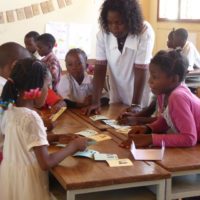
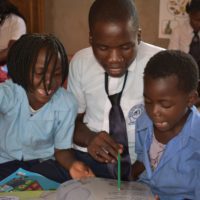
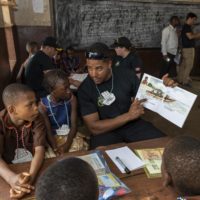
The first one was meant to be a youth centre, but when the community heard that CODE would start a library in their area, they donated it freely and have begun construction right next door for the youth centre. It promises to be a great spot for children in the area. The kids at this reading room spoke English well and we jumped into the centre of a group of students, laughing and talking with them.


The second reading room we visited was in a town called Sebeta, in a semi-urban area just outside of Addis Ababa. It first started as a converted one-room house, donated by the town’s mayor in 1988. CODE-Ethiopia provided books and trained four librarians and five management committee members. With improved resources and services students from Sebeta and also the surrounding area flocked to the Reading Room.


The Sebeta Reading Room was so successful that a second larger one was built by the community to accommodate the demand for access to resources. It’s an impressive story, and we were especially inspired to learn that community members are now working to erect a third library building, thanks to a generous benefactor in the area. In addition, the local government has now included ongoing funding in their municipal budget. This is the definition of sustainability and success in development, and we’re all feeling lucky to see it.

-Ann Speak, Director of Fundraising, CODE


“Ato Tesfaye can only be described as charismatic. He is a man with a powerful presence; clear vision and quiet determination to have all Ethiopian children become readers and writers. He understands real change only comes with the full involvement of all community members who respect each other and work for common goals beyond their personal benefit. He understands that the efforts of other to help less fortunate people must be rooted in strategies that ensure sustainability or the benefits beyond any immediate or short term measure. He understands children need to read and write to be successful and move beyond their current circumstance but they also need to read for pleasure, as a source of nourishment through their literate lives. I believe what I witnessed today was the passion and skills of a truly gifted teacher.”

-Ray Doiron, tour participant


“Our talk at the CODE Ethiopia warehouse was very informative and confirmed my opinion of a well though out program that had evolved through the years to build the partnerships that made it both efficient and sustainable. The warehouse was stacked floor to ceiling with books  of interest to both adults and children. “             

- John Kaminski, tour participant


“So far Ethiopia seems to me to be a large, complex and fascinating country. Given this background, the effectiveness of CODE Ethiopia is truly amazing. Their model of the three legged stool (municipal/local government, the community and CODE Ethiopia) ensure that literacy gains can be made. Not only does this tripartite relationship build literacy, it also makes a neighborhood into a sustainable community.  The challenge is to bring this to every neighborhood in this amazing country. This is hope for their country and Africa.”

- Margaret Casey, tour participant


 The group at King Mekelik’s palace.


We’ve arrived!

Posted on November 10th, 2008 in: Seeing is Believing Tour

It’s great to be here again and amongst Ethiopian friends. We all arrived safely, and without a hitch on Saturday night. We’re just starting to get our feet wet, but the memorable moments are already flooding in…
   

“What’s stayed with me today is the depth of passion I have seen in everyone we’ve been fortunate enough to meet. The depth of joy in the children playing, the depth of dedication and commitment to CODE Ethiopia in those we met tonight, the depth of earnestness in those speaking to us in our language trying to help us in our travels. It is the heartfelt emotion and passion that I will remember whenever I think of my first day in Ethiopia.”
- Adele Kaminski

“After 30 hours of flying and waiting in airports, my first impression of Ethiopia was the beautiful features of the Ethiopian people. What a handsome people! Those in traditional dress were outstanding. The culture and history of Ethiopia is about to unfold.”
- Margaret Casey
 
“The best part of today was the visit to the palace at Mount Entoto - as we came back from the palace and made our way up to the church, we heard a group of 12 children singing a traditional song. …a few girls played a drum and everyone else was clapping and singing. The small room amplified the sound and sent it out through the narrow door. After they finished they invited me in and started a second song. Great sound, beautiful children and a special moment. ”
- Ray Doiron


Seeing is Believing trip… less than one week to departure!

Posted on November 3rd, 2008 in: Seeing is Believing Tour

It’s less than one week to departure and it’s getting very exciting. I look forward to connecting with Ethiopian friends again and seeing how the new Reading Rooms in Addis Akaki and Lidetta have progressed since last year. I also look forward to meeting this incredible group of fellow travelers that I’ve only communicated with over the email these last few months. All keen supporters of literary and the power of a book, I know that we will be reminded of our incredible privilege of being swamped with information in Canada. They will also see the gorgeous landscapes of Lalibela, Bihar Dar and Lake Tana and experience a delicious cup of coffee at a traditional coffee ceremony…

Ann Speak, Director of Fundraising, CODE


The biggest library ambassadors… are children

Posted on October 30th, 2008 in: Malawi, Programs

We sat around the table in the middle of the library.  It was a stifling hot afternoon and our discussion centred on the need for a fan to make the room more conducive to readers, something that the town council agreed to provide.  There were six library users, boys and girls ranging in age from 5 to 10, sitting at a long table, all of whom didn’t seem to notice the heat, or mind it. They sat, each with their own book that they had selected out of the conveniently located wooden crates at the front of the library or else from the shelf housing local language (Chichewa) books. 

The National Library’s school monitoring coordinator, George Kashindo, and I were visiting a library in Salima, about 45 minutes away from the capital city of Lilongwe.  We were meeting with the librarian, who had been trained by the NLS the year before, to hear how she was doing and to see how the library was functioning.  Two officials from the town council were there participating in the discussions since the libraries are set up as partnerships between the NLS and the district assembly to provide the community with access to useful and interesting reading materials. 

While our conversations were going on, the readers continued to browse and select more books, seemingly oblivious to our discussions about library patronage, community outreach, reading promotion, and other issues that we were discussing.

While these things were indeed important to give a bigger picture of the library and its impact, I was mesmerized by the children, how comfortable they were in the library and how well they knew how to navigate the library’s collection.   My attention soon turned to what they were reading.  With CODE support during the last year, the collection has grown to include quite a lot of locally procured reference materials such as dictionaries, picture atlases, and local-language readers, as well as early readers in English supplied by CODE through the International Book Bank. 

While we spoke, more kids kept streaming in, older ones too, who, I was told, were students at the government secondary school located nearby.  We ended our meeting by asking some of them questions about the books they were reading.  Younger kids who were not able to read yet said they liked the early readers and board books, both those in English and Chichewa because they “liked the pictures”. 

The older kids appreciated the Chichewa readers published through the NLS’s Werengani series since they liked reading the stories that were about Malawi.  The older students generally liked the reference materials related to subjects taught at school.  Adults in the community, I was told, were interested in the novels, the daily newspaper as well as information on health issues relevant to their community such as HIV and AIDS.  

While the librarian, district officials, monitoring officer and I discussed reading promotion activities to maximize reach in the community, it was clear that these kids were the biggest library ambassadors of all since, page by page, they were building their love of books and their awareness that there’s a rich world of information out there.  

… a time for new growth

Posted on October 20th, 2008 in: Malawi

Despite the long journey to get from Ottawa to Lilongwe, it is jarring to arrive in Malawi.  Travelling through the central part of the country from Lilongwe to Blantyre, I am conscious of the contrast between Ottawa’s autumn landscape and Malawi’s dry season of parched earth.  The land is almost completely deforested except for fruit trees and every inch seems to be taken up by human activity, especially the growing of maize, Malawi’s staple crop.  Villages are on every hilltop and in every valley; mangos are in season and vendors’ stands with mangoes neatly piled on chairs dot the highway.


The National Librarian, Gray Nyali, and I are on our way to southern Malawi to Chikwawa, an area in the lowlands of the Shire River, to attend the launch of PAMET’s education program in the district. The program, which CODE has supported since 2004, is directed at the improvement of learning outcomes in schools through the development of teachers’ skills in the production and use of teaching and learning aids made from materials found in the local environment. 


To initiate the program in a new district, PAMET must go through the various authorities to sensitize them of the program and gain their support as well as organize a launch ceremony that brings together teachers, students and the wider community for displays, teaching demonstrations and performances.  It’s a lively ceremony with traditional dances, a band, choirs, poetry recitals and speeches revolving around the importance of educating children and it serves to foster community ownership of the project. 


The day after the ceremony, teachers from 16 schools, including headteachers and the local Primary Education Advisor begin a 5-day workshop organized by PAMET and facilitated by seasoned education advisors  who have honed their skills in TALULAR, the acronym for the production of teaching and learning using locally available resources.  The facilitators have a clear understanding of teachers’ needs in the context of primary schools in both the urban and rural areas.


The notion of TALULAR is known to teachers in Malawi, particularly those who have recently gone to teachers’ college as the concept and philosophy was developed by the Malawi Institute of Education in response to the acute shortage of teaching and learning aids in the country.  While TALULAR is presented in teachers’ colleges, it is only in passing and teachers are not provided with skills to equip them to implement TALULAR once they move to their schools.  Understanding the potential of TALULAR, PAMET’s program aims to develop teachers’ skills in depth, not only in the production of these materials, but more importantly on their use in the classroom.  To do so, it requires the institutionalizing of TALULAR in schools through the partnership and support of education officials and on-going support and monitoring.


As teachers move through the 5-day training learning how to produce materials that they will use to teach, it’s clear that a spark has been ignited in the teachers.  Their motivation and innovation is inspiring as they see the potential of applying TALULAR with its participatory and interactive approach to their own teaching as a way to enhance their pupils’ learning.  Responding to the workshop, teachers reflected that they felt empowered, and they were excited to bring back their resources they developed (counters, charts, diagrams, etc) to brighten their classes and interest their students.   During the closing of the workshop, one teacher exclaimed that, “A teacher teaching without TALULAR is like a farmer without a hoe”.


On a drive back to Blantyre from Chiradzulu, there was a short rain signifying the coming of the rainy season.  A time for new growth. 

Christine Earnshaw,

CODE Program Manager

Blantyre, Malawi

Poverty and Books

Posted on October 17th, 2008 in: Local language Publishing, Programs, Reading Promotion

Today is International Day to Eradicate Poverty. On my way into the office this morning I was thinking about how the books CODE publishes today provide for generations to come. More broadly, literacy provides the tools for a person to find their own way in life — education is the most cost efficient thing that can be done in the fight against poverty.

Already today I had the honour of thanking a donor for his generous support to CODE - which has gone from a small donation to a four figure gift over the years. He mentioned that a friend of his did a lot of research on literacy back in the 80’s, and had observed that there was very little printed in local languages or script for young readers to choose from, until he saw CODE’s publications.

He said they shone out amongst the other books because they were so well read by the community that the covers were worn and tattered.  This man was convinced that CODE should be the recipient of his donation and has been on his list for decades.

He understands the long term impact of literacy.

Ann Speak,
Director of Fundraising
CODE